.png)

Disability History Month is an important time to reflect on not just on progress that’s been made for accessibility but where we can collectively continue to improve and adapt the world around us to make it easier for everyone to show up in.
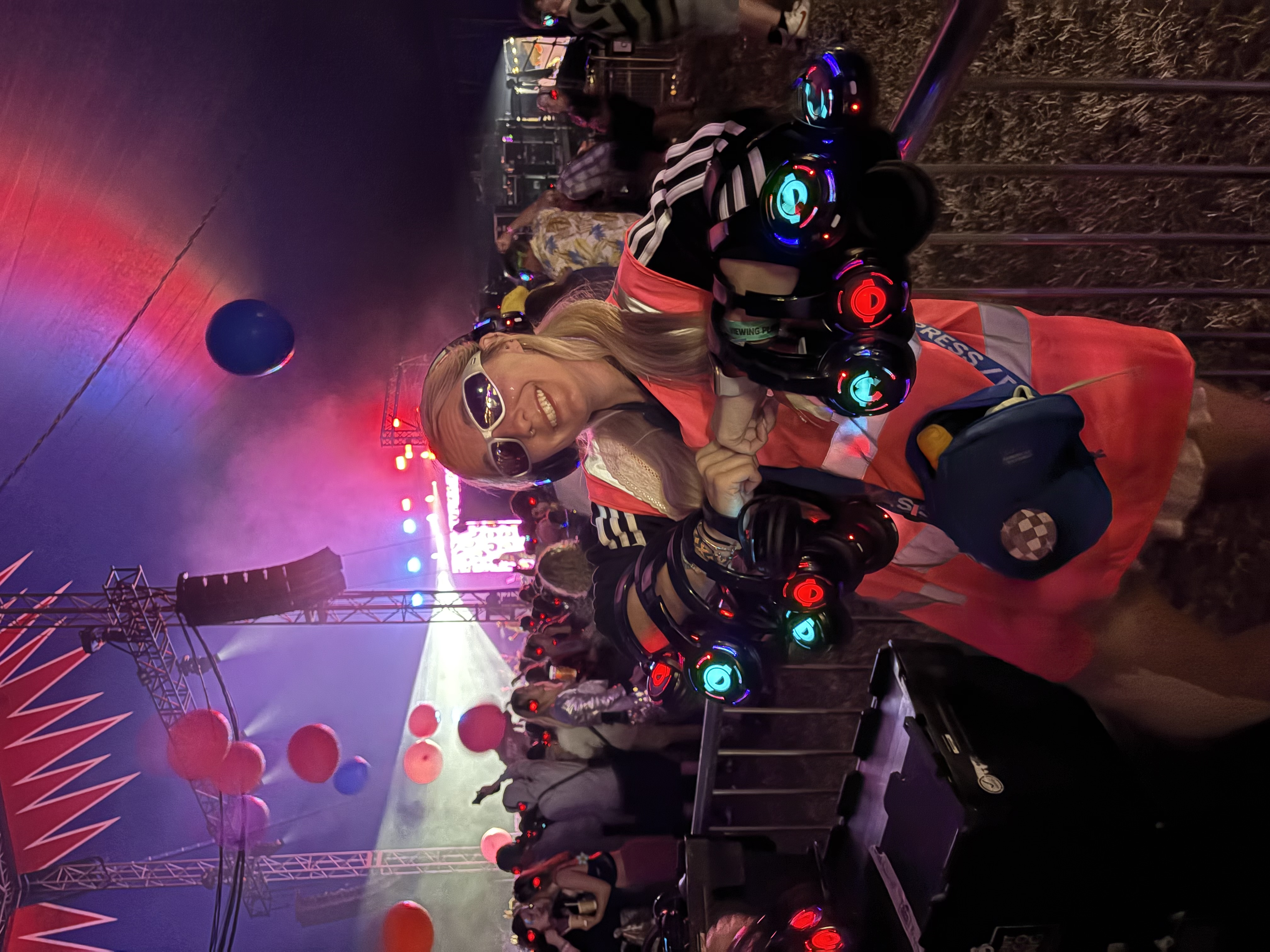
As Events Coordinator here at the Guild, I packed up my tent and boots andheaded to Download Festival last year to volunteer as a steward and develop myexperience on the ground at larger scale events.
I had plans to bring back what I learned to shape our overall events approach so we can continue to give students the best possible experiences at our events. Getting ushered to one side at shift deployment to work on the Main Stage Accessible Viewing Platform drew my role, passions and own lived experience together like magnets, marking the start of my learning shifting more specifically towards event accessibility!
Alongside delivering our Give it a Go Programme, I’ve now worked across major UK festivals including Reading and Leeds, Download and Camp Bestival Dorset, supporting accessibility campsites, viewing platforms, and the access needs of the guests using these facilities. These experiences have given me practical insights that continue to shape how I design and deliver student events day to day.
Briefings in Multisensory Formats:
On the campsite, volunteer briefings were offered twice across the first two nights, with both verbal explanations and pocket guides which had QR codes for digital versions that could be zoomed or read with assistive tech. This ensured information was accessible in multiple formats and could be revisited as needed. I’ve carried this forward by creating pocket guides for our Event Assistants pairing new starters with returners during term one and embedding “see and do” learning beyond their initial training session. By offering information in multisensory formats, we make sure staff can process it in the way that works best for them, building confidence in delivering great experiences for students!
Universal design and clarity through check-ins:
At Download Festival, I noticed guests sometimes struggled to process verbal directions while navigating the campsite. I noticed security staff giving directions slightly further down from where I was stationed, so I decided to pause cars again at crossroads where I was to double-check they were happy with where they were going. Guests appreciated the clarity and reassurance, and said this reduced confusion for them and stress if they'd gone the wrong way and had to turnaround! I fed this back to supervisors as a wider improvement who agreed that clarity and clear communication of any year-on-year changes was important to our access guests. This taught me that these small acts like checking in benefit everyone, not just those with specific access needs. Now, I'm more mindful to practise this by checking in with event assistants to ensure they understand their tasks, and by role-modelling check-ins with attendees. It’s also a reminder that when we make changes, clarity and communication are important so everyone knows what to expect!
Offering Options, and Not Making Assumptions:
On the main stage viewing platform, I managed queues for accessible toilets, paying attention to wristbands indicating urgent access needs. Instead of assuming guests' needs based on their wristbands, I approached guests, said hello, and asked whether they were happy to wait in the queue or if they needed to come to the front. This was appreciated all round, some guests were happy to wait and glad I asked them discretely without them feeling singled out, while others did need to join at the front of the queue but were worried about others' reactions or possibly being challenged. I then walked them to the front and asked the guests at the front if that person could go before them and thanked them for their understanding. Here I learned first-hand 'beyond the briefing' the importance of choice and ownership over access needs. For our student events, I’ve put this into practice by trialling quiet time at the start of Disability History Month activities so students can explore the space before deciding how to participate, and in September introducing flexible “check in” options at events so attendees can join on the day if planning ahead isn’t possible.
Festivals, as with all events, are filled with wonderful moments that form core memories in our lives, moments that everyone deserves to experience without barriers. I now come home after each week in the fields not just with a big bag of dirty washing, but regular reminders of this and a notes app full of ideas for how the Students' Guild can bring this into the design of our events!