.png)

Evaluating Academic Spaces in Social Mobility Week
This academic year, we have both had the pleasure of interning for the HASS Success for All team. Part of our role involves working on and creating important projects such as Social Mobility Week, which ran from 23rd February to 27th 2026. This project meant a lot to both of us and to other students and staff. This is because we not only value and understand the importance of inclusive opportunities that represent and validate our experiences at university, but also the need for a spotlight on community and the Exeter network of like-minded individuals.
This week we hosted several different events that spotlighted different elements of inclusion and factors that create Exeter and gave the full picture of Class and what Social Mobility is.
Class inclusion and giving space to talk about it underpinned all events; there were two sessions in particular that truly showed this with student engagement. While a guild co-run session, ‘Building a Socially Mobile University’ addressed the social side of class and belonging, our session ran by us as interns, Jennie Fox and Karen Walshe, addressed class inclusion in academic spaces.
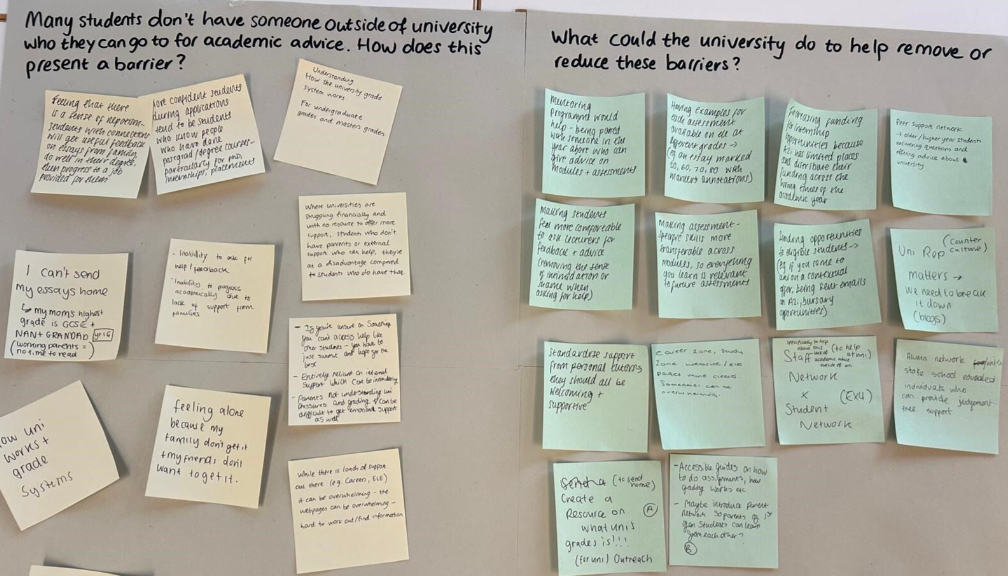
In ‘Reclassifying the Curriculum,’ which aimed to bring together students from across different faculties, we were able to discuss how our class and educational background interact with academic experience at Exeter. To frame the discussion, we worked together to outline four main themes that were relevant to our topic and translated these into eight questions to prompt reflection from students.
Why Reclassifying the Curriculum is necessary, and how it worked.
On the day of the event, attendees split into two groups and worked through all the questions, reflecting on their own experiences and brainstorming ideas to improve student experience at the University. We found that many students could relate to each other’s experiences, particularly when responding to questions that related to approaching university-style learning from a state-educated and first-generation background. There were prevalent experiences related to a lack of class inclusivity awareness in course content, assumed knowledge, accent bias in the classroom, disparities in technology access, etc.
Responses raised a number of consistent barriers to accessing academic opportunity, demonstrating that this issue continually goes under the radar.
However, the activity also raised some positive examples of good practise crafted by students, which could be built on in the future to provide a better sense of belonging. Belonging is so integral for academic performance but often takes a backseat when we consider barriers to academic spaces.
Why was this event important, and what was its impact?
Overall, we felt like this event provided some really important insight into how all the faculties at the University could make changes to make students from a diverse range of class and education backgrounds feel included, validated, and valued. It also created a safe and positive place for students to meet others with similar experiences and feel seen, while fitting the week’s overall ethos of building a sense of community and understanding among students and staff.
By: Ella MARSTON - HASS Success For All Intern 2025/26, English and Creative Writing Department Officer 2025/26. Mia TAYLOR-SEAL - HASS Success For All Intern 2025/26, Co-President of Exeter 93% Club 2025/26